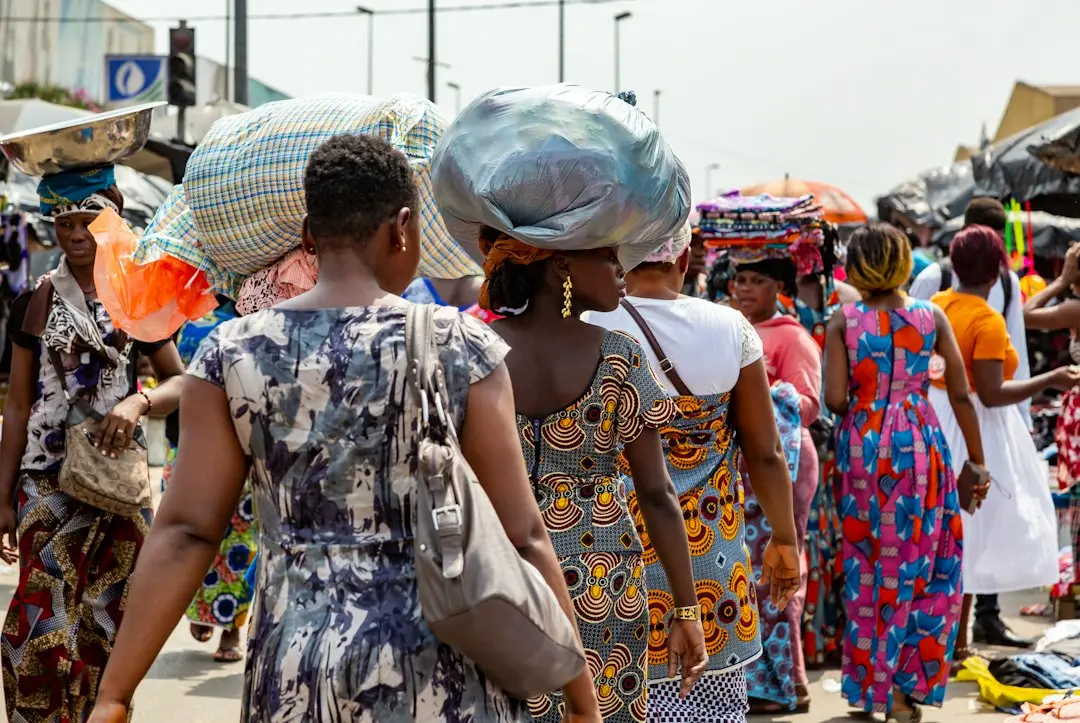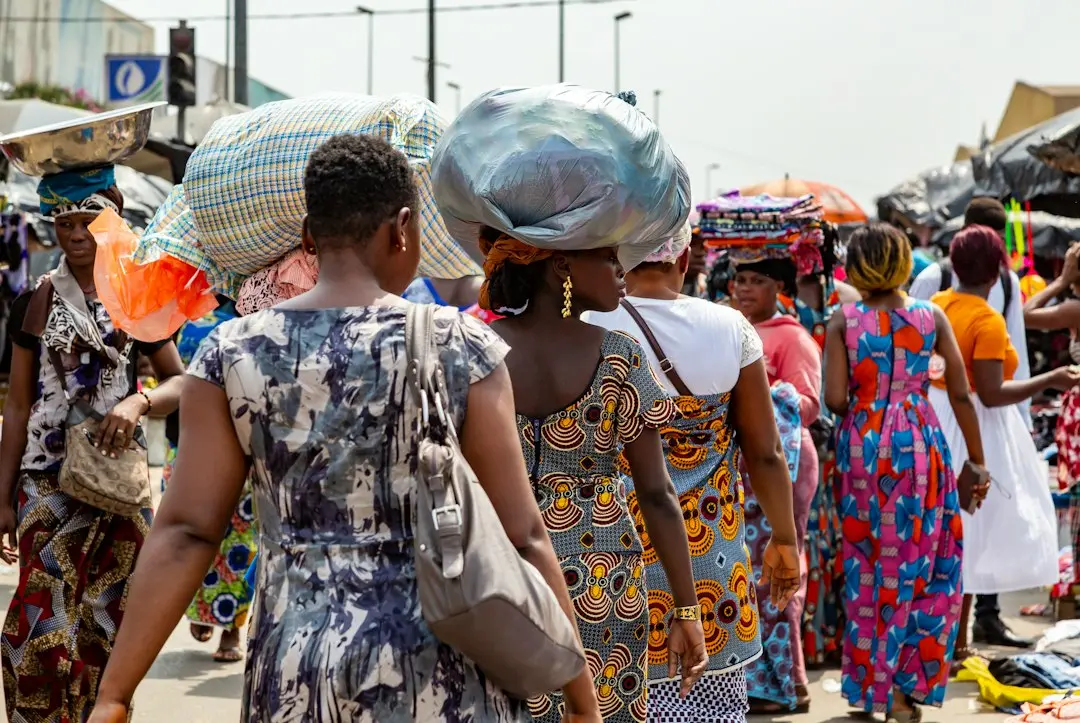


In the dusty alleyways of a popular neighborhood in Nairobi, Amina holds out her phone to a vegetable seller. A few seconds later, a beep confirms the transaction. No bills, no change. Just a simple code. For Amina, as for millions of Africans, the phone has become much more than a communication tool: it is a bank, a lifeline, a lever for emancipation.
A continent where the bank fits in your pocket
On a continent where nearly 57% of the adult population has no access to traditional banking services, mobile banking has opened an unexpected breach. According to the World Bank, Sub-Saharan Africa now has more than 400 million mobile money accounts, representing half of all accounts worldwide.
The Afriques newsletter
- Free & no spam
- 1 email per day
- Unsubscribe in 1 click
“I have never had a bank account, but with my phone, I can send money to my mother in the village,” says Idriss, a motorcycle taxi driver in Ouagadougou. Like him, informal workers, farmers, and street vendors have adopted this technology at a remarkable speed.
The success rests on a simple reality: the majority of Africans own a mobile phone, even a basic one. Thanks to services like M-Pesa in Kenya, Orange Money in West Africa, or MTN Mobile Money, users can transfer money, pay bills, receive salaries, or take out microloans, all without ever setting foot in a bank.
When innovation bypasses missing infrastructure
In many regions of Africa, banking infrastructure is scarce or even nonexistent. Branches are far away, procedures are complex, and fees are high. Mobile banking has bypassed these obstacles by relying on a dense network of small retailers and kiosks, called agents, who serve as intermediaries between digital and cash.
In Dakar, Fatou, a mother, uses Orange Money to pay her children’s school fees. “Before, I had to take a taxi and queue at the bank. Now I do everything from home,” she explains. This simplicity has transformed the daily lives of millions of households.
In 2022, according to the GSMA, the total volume of mobile money transactions in Africa reached 836 billion dollars. A staggering sum, reflecting a profound shift in the continent’s economic habits.
Women gaining autonomy
Mobile banking has not only made payments easier. It has also enabled many women to take control of their finances. In societies where women’s access to financial services is often limited, this technology has opened doors that were long locked shut.
“I can now save money without my husband knowing,” says Mariam, laughing, a doughnut seller in Bamako. Behind this lighthearted remark lies a powerful reality: women who, for the first time, can manage their money, invest in their business, or simply protect themselves against the unexpected.
NGOs and microfinance institutions have seized the opportunity. Several programs target rural women, offering them training and tools to use mobile money as a lever for independence. In Tanzania, an initiative enabled more than 100,000 women farmers to access micro-insurance via their phones.
A gateway to credit and savings
Beyond money transfers, mobile banking opens the way to more complex financial services. By analyzing financial flows on mobile accounts, institutions can now offer microloans to customers with no banking history.
“We use transaction data to assess customers’ creditworthiness,” explains Jean-Baptiste Kouamé, head of innovation at an Ivorian fintech. “This makes it possible to grant loans to people that traditional banks would have ignored.”
Platforms such as Tala or Branch, present in Kenya and Uganda, offer instant loans via mobile, sometimes within minutes. Others, like M-Shwari, offer interest-bearing savings accounts accessible from a simple USSD menu.
This phenomenon stimulates the local economy: small traders can invest, farmers can buy seeds, and young people can start their first business. A virtuous circle that often begins with a simple phone.
Persistent challenges despite the promises
But not everything is rosy in the world of mobile banking. The lack of regulation, cases of fraud, sometimes opaque fees, and the difficulties faced by elderly or illiterate people remain major obstacles.
“I lost 10,000 francs CFA because of a fake SMS,” recounts Moussa, a tailor from Cotonou. Scams are multiplying, taking advantage of users’ lack of awareness. Regulators are trying to keep up, but innovations often move faster than the laws.
Another limitation: accessing mobile banking requires owning a phone, a SIM card, and sometimes a form of ID. In some rural areas, this remains a luxury. And women, despite having gained greater autonomy, are still 13% less likely than men to own a mobile account, according to the GSMA.
Toward large-scale financial inclusion?
Despite these challenges, mobile banking continues to expand. New services are emerging: tax payments, health insurance, collective savings. Some governments are even beginning to pay social benefits directly into mobile wallets.
“It is a silent revolution,” says Nadia El Maktoub, an economist specializing in development. “Africa has skipped stages. It has moved from cash to digital without going through the traditional banking system.”
This revolution is still underway. Every day, new users discover the possibilities offered by their phone. A fish seller in Abidjan, a herder in Niger, a student in Kigali… All connected to a new kind of finance, closer, more flexible, more accessible.
But how far will this transformation go? Can mobile banking truly bridge the social and economic divides of the continent? Or is it merely one tool among many, dependent on public policy, financial education, and digital infrastructure?