
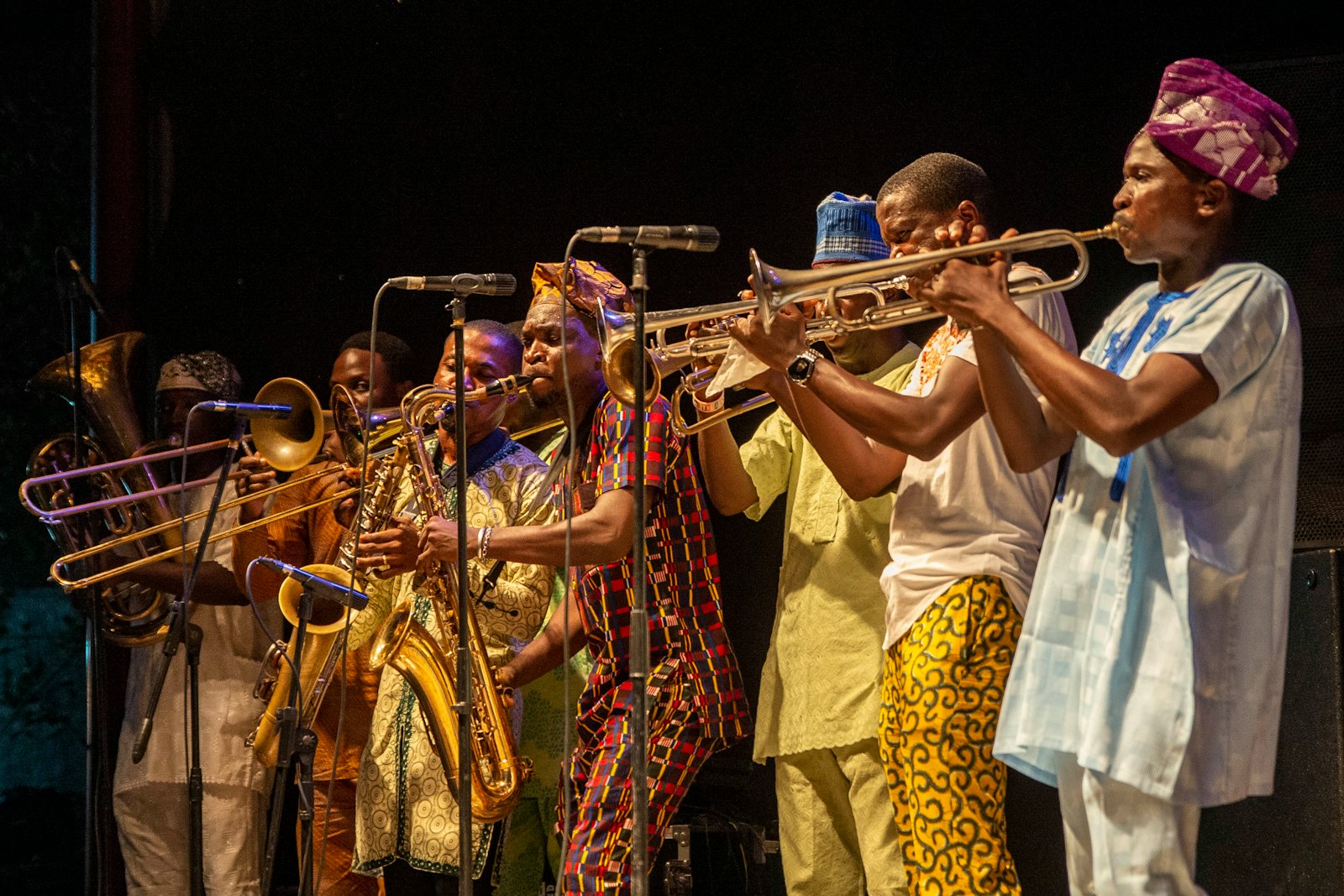
Lagos has long insisted it belongs in the same conversation as New York, London and Seoul when the global creative economy is discussed. For four days this November, the city made that case with numbers attached. Afreximbank’s CANEX WKND 2026 — the pan-African creative and cultural economy forum — opened on 5 November at the Wole Soyinka Centre for Culture and Creative Arts, drawing deal-makers, artists, financiers and government officials from across the continent and its diaspora.
A Billion Commitment — What It Covers
The headline figure from the African Export-Import Bank is a financing commitment of US$2 billion directed at Africa’s creative industries through 2027. Afreximbank has not broken this down by sector in its communiqué, so it is not yet clear how much is earmarked for music, film, fashion, gaming or digital media respectively. What the bank has confirmed is that the commitment spans the continent, not a single country.
For context anglophone investors will appreciate: Africa’s creative economy is widely estimated to be one of the continent’s most underleveraged growth sectors. Nigeria’s Nollywood alone is the world’s second-largest film industry by volume of output. Kenya’s music-tech and Ghana’s fashion export scenes have drawn growing venture interest. South Africa’s creative sector contributes meaningfully to GDP. Yet access to structured, bankable financing has remained a persistent gap — the kind of gap a development finance institution is positioned to fill.
The Afriques newsletter
- Free & no spam
- 1 email per day
- Unsubscribe in 1 click
Nigeria’s Own Piece: 0 Million Through iDICE
Beyond Afreximbank’s continental envelope, Nigeria has a dedicated instrument on the table. According to the bank’s communiqué, more than US$600 million is being unlocked specifically for Nigerian digital and creative enterprises through the iDICE programme — Investment in Digital and Creative Enterprises. The programme targets the intersection of technology and culture: think digital distribution platforms, animation studios, gaming developers and content-tech startups, not just legacy entertainment businesses.
For diaspora entrepreneurs and investors with Nigerian roots, iDICE represents a potentially significant entry point — provided eligibility and disbursement mechanisms are made clear, details the communiqué does not yet supply.
Deal Rooms on Day One: 0 Million Already on the Table
Perhaps the most striking signal of the forum’s commercial seriousness came from Nigeria’s Minister of Industry, Trade and Investment, Jumoke Oduwole, who stated that more than US$500 million in proposed transactions were already under discussion in CANEX WKND’s deal rooms before the event had properly begun. That figure is a proposed pipeline, not closed deals — a distinction worth keeping front of mind — but it reflects genuine transactional intent, not merely networking.
The 2024 edition of the forum, held in Algiers, Algeria, drew participants from 81 countries and facilitated more than US$540 million in trade and investment deals, according to Afreximbank. If Lagos replicates or exceeds Algiers, that would represent consecutive years of half-a-billion-dollar-plus deal flow through a single creative-economy event — a credibility marker the continent’s creative finance ecosystem has been waiting to establish.
Political Weight Behind the Numbers
Vice President Kashim Shettima opened CANEX WKND 2026 on behalf of President Bola Ahmed Tinubu, signalling that the Nigerian government views the forum as more than a cultural showcase. For foreign investors assessing Nigeria’s investment climate — often a complex calculation given currency volatility and regulatory uncertainty — high-level government endorsement of a structured financing vehicle is a relevant data point, even if it does not resolve those underlying concerns on its own.
What to Watch
Three questions this communiqué leaves open are worth tracking over the coming months. First, how will Afreximbank’s $2 billion be disbursed — directly to companies, through partner banks, or via funds — and what are the eligibility criteria for businesses outside Nigeria? Second, will iDICE’s $600 million reach early-stage startups or favour larger, bankable enterprises? Third, will the $500 million-plus in deal-room discussions at CANEX WKND 2026 close at a rate comparable to the $540 million facilitated in Algiers, and on what timeline? The answers will determine whether these numbers mark a turning point for creative-economy finance in Africa or remain an impressive headline awaiting proof of execution.
Source: Afreximbank, 6 November 2026